
Wood plastic composite, usually shortened to WPC, is not one material. It is a family of extruded or molded blends in which lignocellulosic flour is dispersed inside a thermoplastic matrix. The idea sounds simple enough: take wood, lock it inside plastic, and get the best of both. Reality is less cooperative. Wood flour is hydrophilic, meaning it pulls moisture from the air. Most commodity thermoplastics, especially polyethylene and polypropylene, are hydrophobic. Those two instincts clash at every interface, and almost every formulation decision in WPC manufacturing is an attempt to manage that clash without wrecking the economics of the final profile.
That tension is what makes WPC interesting from an engineering standpoint. A product that contains 40 to 60 percent wood flour by weight is not “plastic lumber” in any casual sense. It behaves like a composite, with a stiff phase and a compliant phase, and its field performance depends heavily on whether the two phases stay bonded when moisture and thermal cycling arrive.
Strip away marketing language and a typical extruded WPC contains four functional components. First, wood flour or fiber, usually a sawmill byproduct screened to a controlled particle size. Second, a thermoplastic matrix, most often high-density polyethylene, though polypropylene and PVC appear in specific product families. Third, a coupling agent, commonly maleic anhydride grafted polyolefin, which forms chemical bridges between the hydroxyl groups on the wood surface and the nonpolar polymer chains. Fourth, a lubricant or process aid, often a metal stearate, to reduce friction during extrusion and improve surface quality.
The ratios vary by application and by what the manufacturer is willing to trade away. A published formulation for a wood flour/HDPE composite used 54 percent wood flour, 40 percent HDPE, 3 percent lubricant, and 3 percent coupling agent; a lower-wood variant used 34 percent wood flour and 60 percent HDPE. Neither is inherently better. The higher-wood recipe gains stiffness and a more wood-like feel, but it also gives moisture more pathways into the matrix.
A note on numbers: Formulation data from published studies and supplier disclosures are useful for understanding trends, not for predicting the performance of any specific commercial product. Real production formulations are adjusted for filler dryness, die design, line speed, and target market, and those adjustments rarely appear in public documents.
The relationship between wood content and mechanical properties is not linear, and it does not point in one direction. In an HDPE system where wood flour rose from 40 to 60 percent, density increased from roughly 1.05 to 1.10 g/cm³ and hardness moved upward, while flexural strength dropped from about 37.5 MPa to 27.5 MPa. Flexural modulus, by contrast, climbed. The composite became stiffer but less forgiving before failure. A separate study on recycled polypropylene WPCs found that keeping wood content at or below 50 percent produced the strongest overall mechanical balance, and that overdosing lubricant increased swelling and degraded every mechanical property measured.
| Property trend | Lower wood content (≈35–40%) | Higher wood content (≈55–60%) |
|---|---|---|
| Density | Lower | Higher |
| Flexural strength | Higher | Lower |
| Flexural modulus | Lower | Higher |
| Moisture-driven thickness swelling | Lower | Higher |
| Wood-like surface feel | Weaker | Stronger |
That table is deliberately simplified. The real message is that “more wood” is not a quality upgrade. It is a trade. A deck board and a wall panel do not need the same trade, and a formulation that wins on stiffness may lose on dimensional stability after a wet season.
The most persistent field issue is moisture, not rot in the classical sense. Laboratory tests on WPC decking have shown that fungal decay is unlikely under normal exposure because moisture content often stays well below the roughly 25 percent threshold needed to support decay. The damage happens earlier and more mechanically. Water absorption can reduce the bending modulus of elasticity by a wide margin, with one study reporting losses in the range of 40 to 50 percent, alongside shrinkage and swelling movements in the 22 to 29 percent range. Wood particles swell, the polymer matrix does not follow, and the interface begins to fatigue. Cracks initiate where the two phases were never perfectly bonded to begin with.
There is a case worth recalling from a renovation project at a chemical facility in a humid southern region. The original WPC walkway boards had been specified for their low maintenance reputation. Within a few seasons, end cuts that had been left unsealed showed pronounced swelling, and surface checking appeared along the extrusion direction. The boards had not failed structurally in a dramatic way, but they had become uncomfortable underfoot and visually tired. The replacement specification shifted toward a capped or co-extruded profile with a thicker polymer skin on the wear surface and sealed end details. That change did not eliminate moisture movement, but it slowed the rate at which the core was exposed to bulk water.
Fire performance deserves an honest sentence as well. WPCs are generally more flammable than solid untreated wood because the polymer matrix contributes fuel and can drip. Flame retardants can improve the rating, but they often exact a cost in toughness and processability. A composite intended for a code-governed exterior wall should be evaluated against the applicable fire test standard for that assembly, not against a generic material datasheet.
Recyclability is real but conditional. WPC offcuts and end-of-life profiles can be reground and reprocessed, yet repeated thermal cycles tend to degrade polymer chains and shorten fiber length. Closed-loop recycling is a legitimate pathway, not a perpetual motion machine.
A formulation on paper tells only part of the story. Extrusion temperature profile, screw configuration, die design, cooling rate, and the moisture content of the wood flour before blending all influence how well the coupling agent can do its job. An under-dried flour can hydrolyze the interface before the profile ever leaves the die, and no downstream inspection will reverse that damage. On the commercial side, the difference between a consistent profile and a problematic one often comes down to whether the supplier controls filler drying, additive metering, and dimensional tolerancing in-house rather than across several subcontractors.
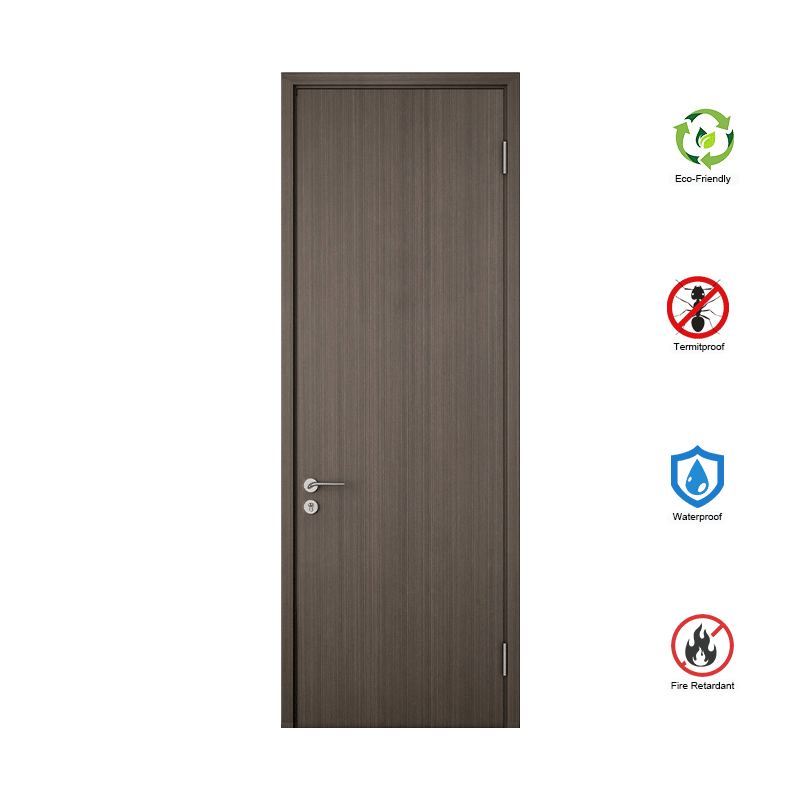
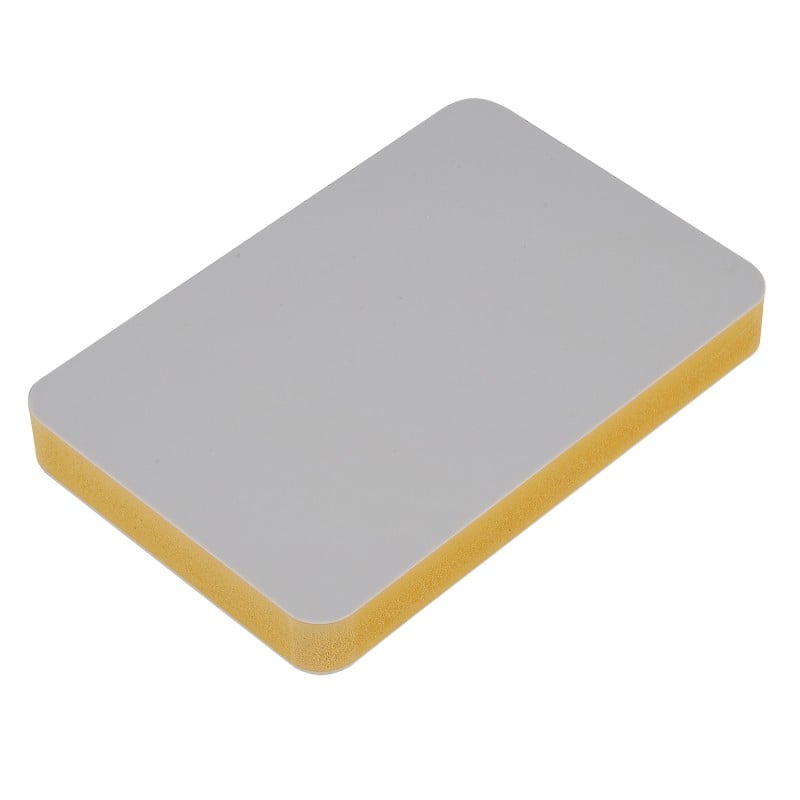
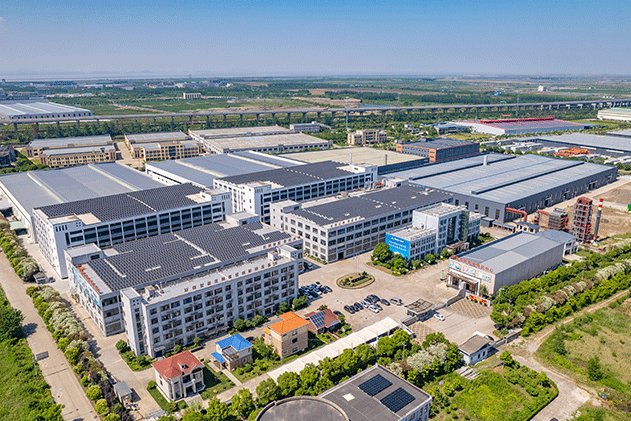
That manufacturing discipline is where a supplier like oufei becomes relevant. The company runs multiple extrusion and lamination lines from a centralized production base, with in-house control over WPC door panels and related profiles, and the practical advantage is not a single specification number. It is the ability to keep formulation, drying, extrusion, and surface finishing under one quality system, so that the material behavior described above stays within a predictable window from order to order.
WPC is not a drop-in replacement for timber, and it is not a maintenance-free material. It is an engineered composite whose performance is bounded by its weakest interface. Understanding the components, the ratios, and the moisture pathway is the difference between specifying a material and guessing at one.
Copyright © 2026 by Hangzhou Oufei New Material Co.,Ltd. — Privacy Policy
 EN


 Hot News
 ONLINE