
A co-extrusion sheet is not a standard WPC board with a fancy coating sprayed on afterward. The two materials leave the die as one melt, at the same time, through the same profile opening. A main extruder pushes the WPC core, usually carrying 50 to 60 percent wood flour blended with recycled PE or PVC, while a smaller side extruder feeds a polymer-rich cap stream into the same die head. The cap is typically 0.3 to 0.5 mm of ASA or modified PE, and it fuses to the core while both are still hot and semi-liquid. That distinction matters more than most spec sheets admit. A laminated film can peel at the glue line. A co-extruded cap has no glue line to fail, because the bond forms at the polymer interface during consolidation, not in a secondary step.
The cap governs surface behavior: color retention, stain resistance, and how fast water finds its way into the board. It does not make the core stronger, stiffer, or more load-bearing. A co-extruded sheet and an uncapped sheet of the same core formulation will carry the same structural rating under ASTM D7032, because the cap is a surface system, not a reinforcement layer. The practical consequence is that co-extrusion solves the appearance clock, not the engineering clock. If a project needs a higher span rating or heavier foot traffic capacity, the answer sits in core design and profile geometry, not in adding more cap thickness.
Accelerated weathering separates the two product families faster than any sales pitch. QUV testing under ASTM G154, which cycles UVA-340 lamps with condensation, shows uncapped WPC drifting into visible fade territory within a couple thousand hours, while an ASA-capped sheet stays inside a much tighter color window. Water uptake tells the same story from a different angle. The wood flour sitting at the surface of an uncapped board is hydrophilic by nature, and that exposed fiber is exactly where swelling and staining begin.
| Performance marker | Uncapped WPC sheet | PE-capped co-extrusion sheet | ASA-capped co-extrusion sheet |
|---|---|---|---|
| Color change (ΔE) after 2,000 h QUV, ASTM G154 | 6–9, visible fade | 4–5 | ≤3 |
| Practical fade window in full sun | 2–3 years | 8–12 years | 15+ years |
| 24-hour water absorption | 1.5–3% | ≤1% | ≤0.5% |
| FOB cost premium over uncapped | baseline | +8–15% | +15–25% |
| Structural load rating | core-dependent | unchanged | unchanged |
The data above comes from accelerated weathering and immersion protocols, and real exposure will vary with cap formulation, pigment package, and how much direct sun the surface actually sees. Still, the directional gap is consistent enough that the cap decision usually comes down to appearance budget, not structural calculation.
A few years back, a coastal hospitality renovation in a humid southern region put the two board types on the same building, split between a shaded service corridor and a fully exposed pool deck. The uncapped sheets on the exposed side developed visible end swelling and a chalky color shift within the first eighteen months. The co-extruded sheets in the same exposure held their shade and showed no edge lift. The interesting part was not the fade itself. It was where the failure started: cut ends and screw penetrations, the places where the wood-flour core sat exposed and took on water before the surface ever had a chance to degrade.
That field pattern lines up with what USDA Forest Service researchers found in a controlled study on capped WPC. A clear cap improved moisture resistance at first, but after weathering the cap itself cracked and delamination followed at the interface. The fix was not a thicker cap. It was a compatibilizer and a photostabilizer package that kept the cap from embrittling under UV and condensation cycling. Co-extrusion is only as good as the adhesion chemistry behind it.
Interior partitions, cabinet panels, and dry, low-UV wall assemblies do not always justify the cap premium. An uncapped sheet with a well-controlled core and a decent pigment dispersion can hold up for years inside a building, and the 8 to 25 percent FOB gap per square meter adds up on a large order. The calculation flips outdoors, especially in salt air or monsoon humidity, where the cap is doing real work every day. A supplier that pushes co-extrusion for every application, including a covered interior ceiling, is either not reading the exposure or not being straight about where the money goes.
There is also a process-side caveat. If the wood flour going into the main extruder is not dried down properly, residual moisture flashes into pinholes at the surface and the cap has nothing clean to bond to. The delamination failures that get blamed on “bad cap material” sometimes trace back to a wet batch upstream, not the ASA or PE formulation.
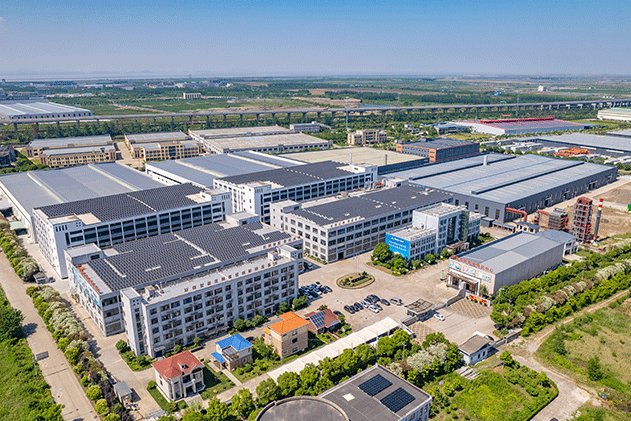
The co-extrusion process is unforgiving on equipment discipline. Two extruders have to stay synchronized at the die, the cap stream has to wrap evenly around the core without thin spots at the corners, and the vacuum calibration table has to hold both layers to dimension while they cool together. Hangzhou Oufei has been running this setup since 1997 and operates more than 50 co-extrusion lines with a daily output above 200 tons, backed by ISO 9001 and SGS product certification. That kind of line count matters less as a headline and more as a sign that the process window is being held across production runs, not dialed in once on a sample and then left to drift. For buyers comparing co-extrusion sheet suppliers, the question to ask is not whether a cap exists. It is whether the mill can show you the bond integrity and surface porosity data behind it.
Copyright © 2026 by Hangzhou Oufei New Material Co.,Ltd. — Privacy Policy
 EN


 Hot News
 ONLINE