
A commercial furniture exporter based in Vietnam shipped 2,400 office desks to a European buyer in early 2025. The order passed factory inspection, cleared customs, and arrived at the distribution center in Hamburg. Then the complaints started. Surface scratches—visible under warehouse lighting—on roughly 15% of the desktops. The buyer demanded a 12% discount on the entire container to cover rework and "diminished value." The exporter ate the loss.
The root cause? A glossy laminated surface that looked great in the showroom but showed every micro-abrasion from the packaging process and container transit. The finish had adequate scratch resistance on paper. In practice, it failed the real-world test of international logistics.
This scenario plays out more often than the industry likes to admit. Office furniture exported from manufacturing hubs in Asia faces a gauntlet of abuse: stacking during container loading, shifting cargo, unpacking at distribution centers, and daily use in busy office environments. The surface finish isn't just about aesthetics—it's about surviving the journey from factory floor to end-user desk.
Glossy surfaces reflect light uniformly, which means any disruption—a scratch, a scuff, a fingerprint—catches the eye immediately. Matte finishes scatter light in multiple directions. A scratch that would be glaringly obvious on a high-gloss desktop becomes nearly invisible on a matte surface.
But the visual advantage is only half the story. Matte PVC lamination films designed for office furniture typically incorporate specific additives and surface textures that enhance physical scratch resistance beyond what a standard glossy film provides. The "matte" characteristic isn't just an optical effect; it's achieved through controlled surface micro-texturing that also happens to reduce the contact area for abrasive particles, distributing pressure more evenly across the surface.
Third-party testing under EN 15186, the European standard for scratch resistance of surfaces, shows that premium matte PVC films can achieve ratings of 8 Newtons or higher before visible scratching occurs. Standard glossy films without enhanced topcoats often fall below that threshold. For context, 8 Newtons is roughly the force of dragging a ballpoint pen across a surface with moderate pressure. An office desk sees that kind of contact daily—laptop feet, binder clips, the edge of a coffee mug.
The journey from an Asian manufacturing facility to a corporate office in Munich or New York involves multiple friction points:
Stacking and compression during container loading. Desktops stacked face-to-face with protective interleaving—but that interleaving shifts. When it does, the surface above rubs against the surface below.
Temperature fluctuations inside shipping containers. Heat softens PVC films slightly, making them more susceptible to marking from pressure points.
Warehouse handling at distribution centers. Forklifts, pallet jacks, and manual handling introduce scuffs that glossy surfaces broadcast loudly.
Installation by local teams who aren't always as careful as the factory QC staff.
A matte finish doesn't prevent scratches—no surface finish does. But it makes the inevitable scratches far less visible, and the micro-textured surface actually resists initial marking better than a smooth glossy equivalent.
Independent testing of laminated surfaces tells a clear story. One comparative study on decorative laminates for furniture applications showed scratch resistance values ranging from 0.5 to 3.0 Newtons for standard finishes, while enhanced matte formulations with specialized topcoats reached 1.5 to 3.0 Newtons on the same test apparatus. The gap might seem small numerically, but in practice, it's the difference between a surface that shows wear after six months and one that still looks new after two years.
Abrasion resistance, measured through Taber testing cycles, shows similar divergence. High-performance matte laminates can achieve 400 to 2000 cycles before visible wear appears, compared to 200 to 600 cycles for standard decorative films. That's not a marginal improvement—that's a 2x to 3x performance advantage in real-world wear.
For exporters calculating return on investment, the math is straightforward. A matte PVC lamination might add $0.50 to $1.50 per square meter to material costs. The potential write-down on a single scratched container can run into tens of thousands of dollars. The premium pays for itself many times over—provided the film specification is actually delivering the promised performance.
Office furniture doesn't live in a museum. Desks get used—laptops slid across surfaces, stack of files dragged from one side to the other, meeting participants setting down keychains and phone chargers. A 2024 facilities management survey across European corporate offices identified desktops as the third most frequently replaced furniture component, behind only office chairs and task lighting. Surface wear was the primary reason cited.
Matte finishes address the specific failure mode that drives early replacement: cumulative micro-abrasion that gradually dulls glossy surfaces and makes them look tired. A matte surface starts out looking matte. It doesn't "go dull" because it was never glossy to begin with. The visual consistency over time is a significant advantage that doesn't show up in a one-time scratch test but becomes obvious twelve months into service.
There's also the fingerprint factor. Glossy surfaces are notorious for showing smudges. In open-plan offices, where cleaning cycles might be weekly rather than daily, that matters. Matte films with anti-fingerprint properties—common in the better grades of office-grade PVC lamination—keep surfaces looking cleaner between maintenance visits.
A medium-sized office furniture manufacturer in Zhejiang province switched from glossy to matte PVC lamination on their best-selling desk line in late 2023. The decision wasn't driven by aesthetics—it was driven by a container rejection from a Saudi Arabian buyer the previous quarter. The glossy desktops showed transit scuffs that the client's QC team flagged as "unacceptable surface condition."
The switch to a 0.35mm matte PVC film with enhanced scratch resistance changed the equation. Over the next three shipping cycles, surface-related complaints dropped to near zero. The Saudi client not only continued ordering but increased volume by 40% in 2024. The factory's export manager noted that the matte finish also simplified packaging—less interleaving material was required because the surface was less prone to showing contact marks.
The lesson wasn't that glossy finishes are bad. Glossy has its place in certain design contexts. But for high-volume export where furniture travels thousands of miles and passes through multiple handling points, matte offers a risk-adjusted advantage that glossy can't match.
When specifying matte PVC lamination for office furniture export, here's what matters beyond the word "matte":
Gloss level. True matte typically measures 0–3 gloss units at a 60° angle. Anything above 10 units is more accurately described as "low gloss" and won't deliver the same scratch-hiding benefit.
Scratch resistance rating. Look for documented performance under EN 15186 or equivalent standards. 8 Newtons is a reasonable benchmark for office furniture.
Film thickness. 0.30mm to 0.45mm is typical for horizontal surfaces like desktops. Thinner films offer less physical protection.
Abrasion resistance. Taber test results above 400 cycles indicate durable performance.
Adhesive system. The lamination is only as good as the bond. PUR hot-melt adhesives generally outperform standard EVA systems for long-term durability.
The temptation to save a few cents per square meter on lamination film is constant in export manufacturing. Margins are tight, and every line item faces pressure.
But the total cost of a surface failure extends far beyond the film itself. There's the cost of rework or replacement. There's the cost of shipping replacements. There's the cost of damaged client relationships. There's the cost of delayed payment while disputes get resolved. And there's the reputational cost—the buyer who had a bad experience tells other buyers.
A matte finish with genuine scratch resistance isn't a luxury. For office furniture exporters, it's a risk management tool. It's the difference between a container that arrives ready for installation and one that arrives with a discount request attached.
Manufacturers like Hangzhou Oufei, which operate integrated production lines from film extrusion through to board lamination, offer exporters more consistency in surface performance. When the same facility controls the film formulation and the application process, there are fewer opportunities for specification drift. For exporters shipping to markets where surface quality is non-negotiable, that consistency is worth more than any per-unit cost saving.
Copyright © 2026 by Hangzhou Oufei New Material Co.,Ltd. — Privacy Policy
 EN
EN

 Hot News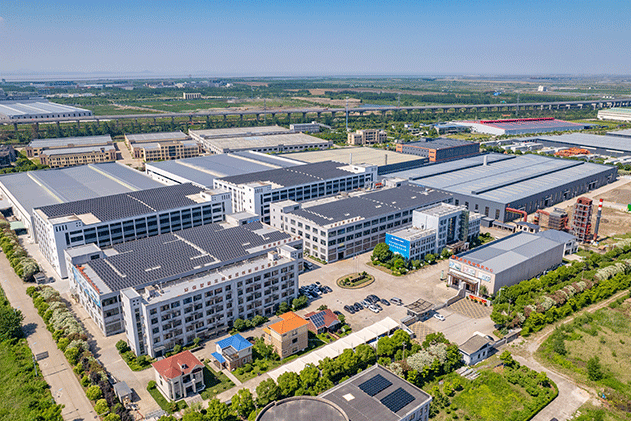
 ONLINE