
Walk into any modern office building, hotel lobby, or healthcare facility, and chances are you're surrounded by three-layer WPC sheets. They're in the wall panels, the desk surfaces, the door cores, and the partition systems. But here's the thing—nobody thinks about the middle layer.
The outer skins get all the attention. They carry the decorative finish, resist moisture, and take the daily abuse of fingerprints, coffee spills, and cleaning chemicals. The middle foam core? It's out of sight, out of mind. Until something goes wrong. Until a door warps. Until a panel sags under load. Until a screw pulls out. That's when facility managers and furniture manufacturers start asking what that middle layer actually does.
The short answer: the foam core is the structural backbone that makes three-layer WPC sheets viable for commercial applications. The longer answer involves density, flexural performance, screw-holding strength, and the physics of sandwich structures.
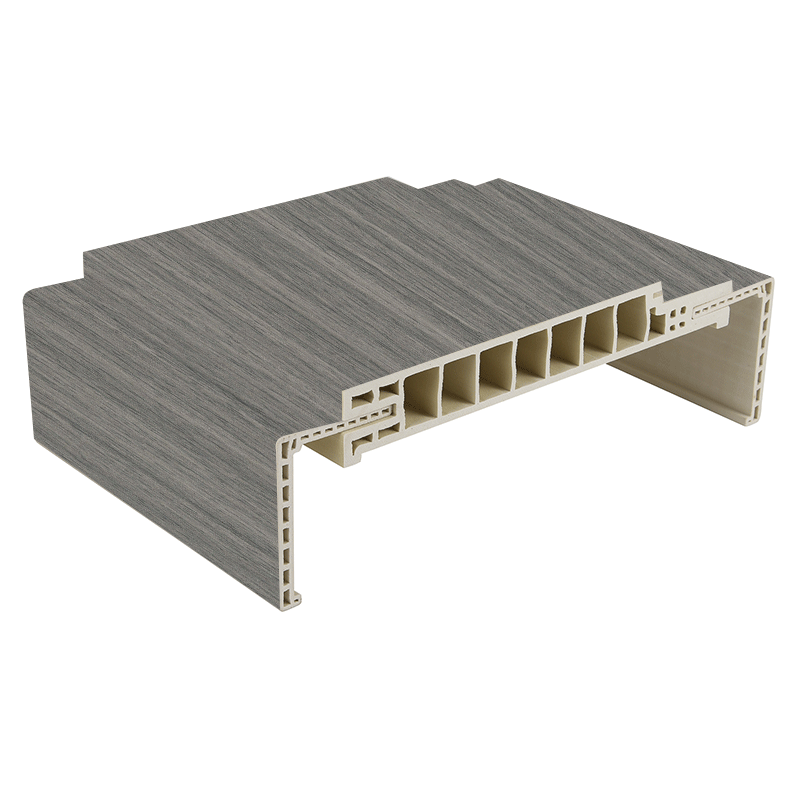
The engineering principle behind three-layer sheets is deceptively simple. Take two thin, dense skins and bond them to a thicker, lighter core. The skins handle tension and compression—bending forces, basically. The core keeps the skins separated and resists shear forces.
This is the same principle that makes an I-beam more efficient than a solid rectangular bar of the same weight. The flanges do the bending work; the web handles the shear. A three-layer WPC sheet works the same way, just in a different material package.
The foam core's primary job is maintaining the distance between the outer skins. Doubling the core thickness increases the panel's bending stiffness by a factor of roughly eight, all else being equal. That's not a linear improvement—that's an exponential leap. A thicker core transforms a floppy panel into a rigid one without adding proportional weight.
This is why three-layer construction matters. A solid WPC sheet of the same overall thickness would weigh significantly more and cost substantially more to produce. The foam core delivers structural performance at a fraction of the material weight.
Not all foam cores are created equal. The density of the core material directly influences the panel's mechanical properties. Research on foam-core WPC panels has examined densities ranging from 80 to 120 kg/m³, with clear correlations between higher density and improved bending strength and internal bond.
For commercial-grade three-layer WPC sheets, typical foam core densities fall between 0.35 and 0.80 g/cm³. At the lower end of that range, the panel is lighter and cheaper to produce but offers reduced screw-holding strength and lower resistance to point loads. At the higher end, the panel approaches the performance of solid material while maintaining a weight advantage.
| Core Density | Relative Weight | Screw Holding | Flexural Strength | Typical Application |
|---|---|---|---|---|
| Low (0.35–0.50 g/cm³) | Lightest | Moderate | Adequate for vertical applications | Wall panels, decorative cladding |
| Medium (0.50–0.65 g/cm³) | Balanced | Good | Strong | Door cores, furniture panels |
| High (0.65–0.80 g/cm³) | Heavier | Excellent | High | Work surfaces, load-bearing panels |
The data from flexural testing of WPC foam boards shows bending strength values ranging from 12 to 25 MPa, with flexural modulus between 650 and 900 MPa. The higher end of that range comes from denser core formulations and optimized skin-to-core bonding.
One of the most practical measures of a panel's structural performance is screw-holding strength—the force required to pull a screw out of the material. In furniture and door applications, hinges, handles, and mounting hardware depend on this property.
WPC foam boards with wood fiber content in the core formulation show significantly better screw-holding performance than pure PVC foam boards. The wood particles create mechanical interlocking points that resist pull-out forces. Test data shows screw-holding strength of 750 Newtons or higher for quality WPC foam boards.
The foam structure itself contributes to this performance. A cellular core distributes the load from a screw over a wider area than a solid material would, reducing localized stress concentrations. The closed-cell structure of quality foam cores also prevents the kind of crumbling that can happen with lower-quality open-cell foams.
For a door that gets opened and closed thousands of times a year, that screw-holding strength isn't an academic metric. It's the difference between a hinge that stays tight and one that works loose over time. It's the difference between a handle that feels solid and one that wobbles.
A commercial interior fit-out company in Dubai specified three-layer WPC sheets for 420 linear meters of office partitions in a new high-rise development. The spec called for 18mm panels with a medium-density foam core. The installation team reported that the panels cut cleanly, routed without chipping, and held screws firmly during hardware attachment.
Six months after installation, the project manager conducted a follow-up inspection. Not a single panel showed sagging, warping, or screw pull-out. The foam core had done its job—maintaining panel flatness under the weight of mounted monitors and shelving, resisting the shear forces from accidental impacts, and keeping the partition system stable in a climate-controlled but high-traffic environment.
The same firm had previously used solid PVC boards for similar projects. The switch to three-layer WPC with foam core reduced material weight by approximately 30% per panel while maintaining comparable structural performance. The lighter panels meant faster installation, lower shipping costs, and less strain on the mounting hardware. The project came in under budget and ahead of schedule.
The foam core's cellular structure does more than save weight and provide structural support. Those closed cells trap air, which makes the panel a reasonably effective acoustic and thermal barrier.
In office partition applications, the sound reduction between adjacent workspaces matters. While a 18mm three-layer WPC panel won't match the acoustic performance of a dedicated soundproof wall, it provides noticeably better sound attenuation than a solid panel of the same thickness. The foam core dissipates sound energy through the cellular structure rather than transmitting it directly.
Thermally, the trapped air in the foam core provides insulation value that solid WPC or PVC boards lack. In applications where panels are exposed to temperature differentials—exterior walls, cold storage interfaces, or buildings with aggressive HVAC cycling—the foam core reduces heat transfer and minimizes condensation risk.
The foam core is the panel's strength, but it's also the panel's vulnerability. Poor bonding between the skins and the core is the most common failure mode in low-quality three-layer sheets. When that bond fails, the panel loses its composite action. The skins and core act as separate layers rather than a unified structure. Flexural strength drops dramatically.
Core density also matters. Too low, and the panel lacks the stiffness for horizontal applications. Too high, and the weight advantage over solid material diminishes. The optimal density depends on the specific application—vertical wall panels can use lighter cores, while desktops and work surfaces need denser formulations.
Moisture exposure is another consideration. Quality WPC foam cores have low water absorption—typically under 1.0%—but prolonged exposure to standing water or high humidity can degrade core performance over time. The core itself isn't water-soluble, but the bond between core and skins can fail if moisture penetrates the edges.
For export-oriented projects, these limitations matter. Specifying the right core density and ensuring edge sealing are as important as choosing the right decorative finish. A beautiful surface on a compromised core is a panel that will fail prematurely.
The foam core's performance depends entirely on manufacturing consistency. Variations in foaming agent distribution, extrusion temperature, or cooling rate can create density gradients within a single panel. Those gradients become weak points.
Manufacturers with integrated production lines—where the compound formulation, extrusion, foaming, and lamination happen under one roof—have a distinct advantage. Process control is tighter. Batch-to-batch variation is lower. The foam core that comes off the line today performs the same as the one that came off yesterday.
For buyers specifying three-layer WPC sheets for commercial projects, the manufacturer's production capability matters as much as the material specification on paper. A well-designed panel from a consistent production process will outlast a theoretically superior panel from an inconsistent one.
Hangzhou Oufei's operation, with its 50+ co-extrusion lines and full-chain production model, exemplifies the kind of manufacturing discipline that delivers reliable foam core performance shipment after shipment. When the core is right, the panel works. When the panel works, the project succeeds.
Copyright © 2026 by Hangzhou Oufei New Material Co.,Ltd. — Privacy Policy
 EN
EN

 Hot News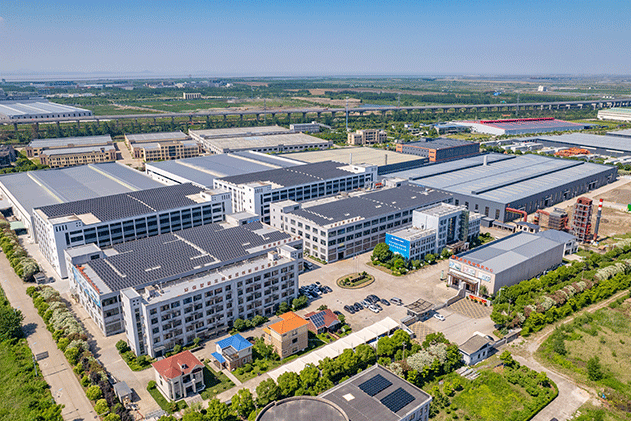
 ONLINE