
Wood rot gets blamed on “getting wet” all the time. That shortcut misses the actual mechanism, and missing the mechanism is exactly why some “rot-resistant” substitutes still fail in the field. Natural wood does not decay because water is evil. It decays because water unlocks a biological process, and that process needs three things at once: a food source, enough moisture, and the right temperature window. Take away any one of those and the fungi that cause rot cannot get a foothold. PVC board earns its reputation in wet, humid, and intermittently soaked environments because it removes two of those three conditions structurally, not through a surface coating or a chemical add-on.
Decay fungi feed on cellulose and lignin. Those polymers are the structural backbone of every piece of natural timber, and no amount of drying, sealing, or painting changes their chemical identity. What changes is whether fungi can access them. Research on wood biodeterioration puts the practical moisture threshold in clear terms: fungal growth is completely inhibited when wood moisture content stays below 20%, and the trouble zone begins once fiber saturation is approached, typically in the 25% to 30% range. Above that line, the cell walls hold free water, enzymes can move, and the decay sequence starts.
This is why a deck board that looks dry on the surface can be rotting from the inside out after a few seasons. The outer face dries fast after rain, but the end grain and any check cracks pull water inward, and the core stays above the threshold long enough for fungi to establish. Once colonization happens, the structural loss is irreversible. Paint and stain slow the moisture cycle, but they do not eliminate the food supply underneath.
Cellular PVC board behaves differently at the material level. It is a foamed polyvinyl chloride sheet with a closed-cell microstructure, meaning the voids inside the sheet are not interconnected channels that wick liquid water through the thickness. Water absorption on a 24-hour immersion test commonly lands under 0.5% by ASTM D570, and some formulations report values closer to 0.15%. Natural wood, by comparison, can take up several times its weight in water when unprotected, and even a modest 8% absorption rate is enough to set up the moisture gradients that drive swelling, checking, and fungal risk.
The second difference is more fundamental. PVC contains no cellulose and no lignin. Rot fungi are not equipped to digest a chlorinated hydrocarbon chain. They can sit on the surface of a wet PVC board, but they cannot extract nutrition from it, so the colonization step never progresses into structural decay. A board that stays wet indefinitely is still a board with no food value for wood-rotting organisms. That distinction sounds academic until a project is five years in and the timber alternatives are soft at the base while the PVC is unchanged.
A renovation project at a chemical processing facility makes the gap visible. The existing timber blocking around a wash-down area had been specified as pressure-treated and painted, but after several years of exposure to condensate, splashing, and humid air, the end grain had gone soft. A probe sank in without resistance near the anchor points, and the paint film was intact everywhere the decay had already advanced. The replacement called for a cellular PVC board in the same thickness so the hardware could be reused. Two years later, the PVC sections showed no swelling, no surface delamination, and no soft spots at the cut edges, while the adjacent timber that had been left in place needed another round of remedial treatment.
That field pattern matches the lab data. A side-by-side comparison of the relevant properties tells the story without much decoration:
| Property | Cellular PVC board | Natural wood (untreated) |
|---|---|---|
| 24-hour water absorption, ASTM D570 | Typically under 0.5%, often 0.15–0.30% | Commonly several percent; surface absorption can exceed 8% in unprotected exposure |
| Food source for decay fungi | None; no cellulose or lignin content | Cellulose and lignin present throughout the cell wall |
| Dimensional response to moisture | Essentially inert at normal service temperatures | Swells across the grain, cups, and checks as moisture cycles |
| Decay threshold behavior | Does not support fungal colonization regardless of wetting | Fungal growth inhibited below roughly 20% moisture content, risk rises as fiber saturation is approached |
The table also explains a limitation that deserves honesty. PVC board does not make a structure waterproof. If a joint is designed to trap standing water against the board face for months, the water still has to go somewhere, and the fasteners and adjacent materials still need detailing. What PVC removes is the material’s willingness to participate in its own decomposition. That is a narrower claim than “waterproof forever,” but it is the claim that holds up under inspection.
A common field assumption is that a good coat of paint or a penetrating sealer converts natural wood into a rot-proof material. It does not. Coatings manage the rate at which moisture enters and leaves the wood, but they do not change the wood’s internal chemistry. Any breach at a fastener head, a cut end, or a hairline crack in the film becomes a local moisture entry point, and the wood behind the coating can sit above the 20% threshold long enough for decay to start. The coating hides the problem until the surface depresses under thumb pressure.
PVC board takes a different path. The material itself is the moisture barrier, so there is no film to maintain and no cut end that exposes a thirsty substrate. That is why cellular PVC trim and sheet are often specified where the design cannot guarantee perfect drainage or where maintenance access is expensive. The trade-off is thermal behavior: PVC expands and contracts more than wood with temperature swings, so panel layouts and fastener details need room for movement. Ignoring that detail can produce oil-canning or tight joints that look worse than a minor paint touch-up on timber. The material resists rot well; it does not forgive poor installation.
The practical takeaway is to stop treating “rot resistance” as a single score and start matching the material to the failure mode the project actually faces. In dry, protected interior conditions, natural wood performs fine and brings advantages that a polymer cannot replicate. In continuously damp, humid, or intermittently soaked service, the calculus changes because the wood’s food value remains intact no matter how many times it dries out between wetting events. A PVC board with a closed-cell structure and verified low absorption gives the specifier one less biological variable to manage.
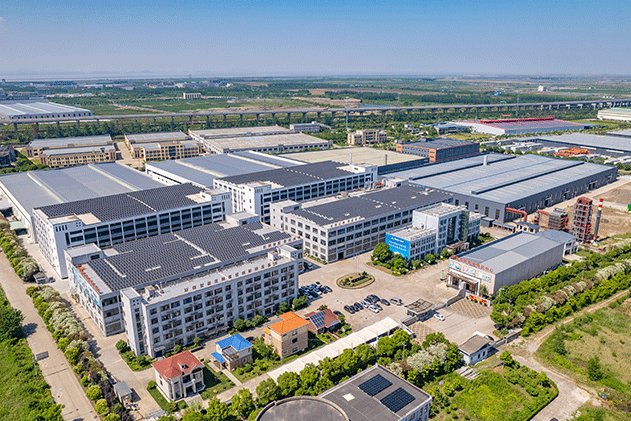
For buyers comparing suppliers, the useful questions are about the cell structure, the density range, and the absorption data tied to a recognized test method. A manufacturer with decades of extrusion experience and a broad production footprint can hold those properties consistently across thicknesses and batches, which matters when the same detail is repeated across a large project. Hangzhou Oufei New Materials has been producing PVC sheet since 1997 and runs more than 50 automated lines, so the material consistency conversation can start from a manufacturing base rather than a single sample. That kind of production depth does not change the polymer science, but it does reduce the odds of getting a board that behaves differently from the one that was specified.
Copyright © 2026 by Hangzhou Oufei New Material Co.,Ltd. — Privacy Policy
 EN


 Hot News
 ONLINE