
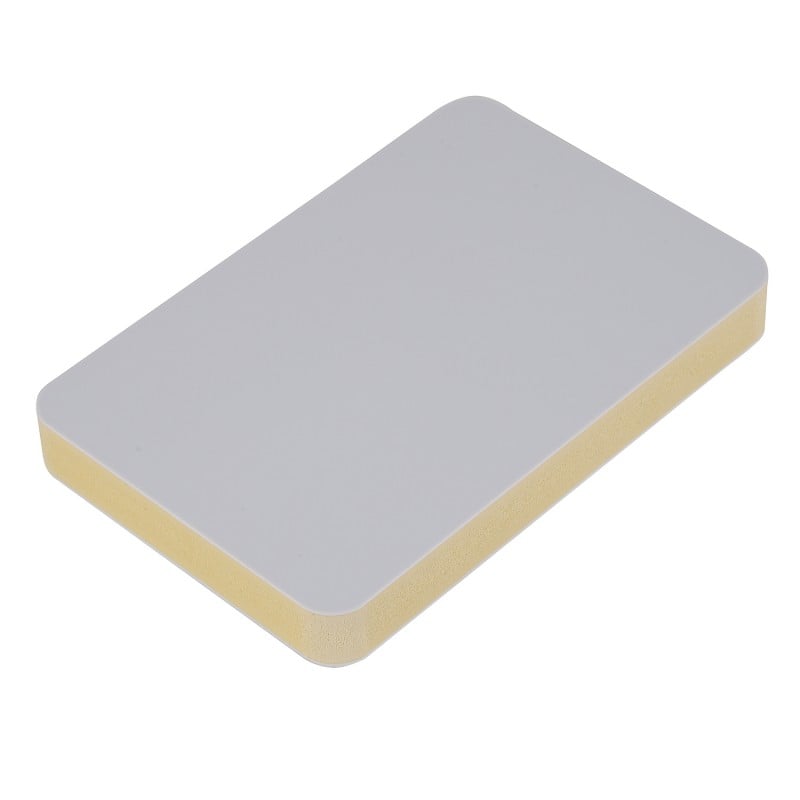
Walk onto any mid‑sized commercial renovation site these days, and chances are high that someone is cutting, routing, or fastening PVC foam board. The stuff has quietly become a go‑to substrate for everything from lobby millwork to exterior trim details. But not every construction material earns that kind of versatility. The question is less whether PVC foam board works on a job site, and more about exactly where it delivers the best return on the labor and material investment.
A 2025 market estimate placed the U.S. PVC foam sheet market at roughly $8.3 billion, with China’s market projected to reach $8.5 billion by 2032 at a CAGR of 7.4%. That scale reflects real adoption, not hype. Yet specifiers still ask the same practical question: what does this stuff actually do better than plywood, MDF, or aluminum composite?
The single biggest killer of conventional substrates in construction is water. Plywood swells, MDF disintegrates, and even pressure‑treated lumber eventually succumbs to prolonged dampness. PVC foam board, on the other hand, exhibits extremely low water absorption due to its closed‑cell structure. That characteristic alone makes it the default choice for bathroom partitions, kitchen cabinet cores, and exterior soffit applications where humidity cycles are unavoidable.
A chemical plant retrofit in the Gulf Coast region a few years back illustrates the point. The facility’s existing MDF control‑room paneling had swelled to the point that doors wouldn’t close properly after a particularly wet summer. The replacement spec called for 13‑mm PVC foam board throughout the non‑classified areas. Three rainy seasons later, the panels remained dimensionally stable, with zero visible edge swelling. That kind of field performance is hard to argue with.
Modern office layouts change constantly. Departmental reorganizations, team expansions, and hot‑desking configurations all demand walls that can be relocated without leaving a trail of demolished drywall and patched‑up framing. PVC foam board partitions offer a compelling alternative.
One case study from a commercial interiors project documented an 85,000‑square‑foot headquarters renovation that used PVC foam board within modular partition wall systems. The design accommodated frequent departmental reorganizations without requiring permanent construction. The material’s light weight—roughly half the density of MDF at comparable thickness—means fewer crew members are needed for installation, and the panels can be handled with standard woodworking tools.
Exterior trim, column covers, and decorative fascia are demanding applications. UV exposure, temperature swings, and occasional moisture all take their toll. PVC foam board holds up reasonably well in these roles, provided the formulation includes adequate UV stabilizers and the surface receives proper finishing.
The material’s performance under high temperatures is also worth noting. It maintains stable physical properties even when surface temperatures climb well above ambient. That thermal stability reduces the risk of warping or sagging in dark‑colored exterior applications, a problem that plagues some competing polymers.
Still, there are limits. In extreme desert climates with sustained temperatures above 110°F and direct sun exposure, even stabilized PVC foam board can show some surface degradation over a decade of service. For those conditions, specifying a thicker gauge or a co‑extruded capstock version provides additional margin.
Advertising and wayfinding signage represent a massive slice of the PVC foam board market. The material routes cleanly, accepts vinyl graphics without ghosting, and doesn’t warp under the weight of large‑format prints. Unlike corrugated plastic or fluted polypropylene, PVC foam board offers a rigid, flat surface that holds screws and mechanical fasteners securely.
The installation speed advantage shows up consistently in field reports. One commercial signage contractor reported a 75% decrease in installation time per location after switching from traditional substrate materials to PVC foam board. That efficiency gain comes from the combination of light weight, easy cutting, and predictable fastening behavior.
PVC foam board isn’t typically marketed as a green building material, yet it contributes to energy efficiency through improved insulation properties. Multiple case study projects have achieved LEED points specifically attributable to PVC foam board component selections. The material’s closed‑cell structure provides measurable R‑value benefits in wall assemblies and ceiling applications.
Recyclability also factors into the equation. Offcuts and production scrap from PVC foam board manufacturing can be reground and reintroduced into the extrusion process, reducing virgin material consumption. This isn’t a perfect closed‑loop system—additives and colorants complicate the recycling stream—but it represents a meaningful waste‑reduction pathway that many competing materials lack.
Honest assessment requires acknowledging the material’s limitations. PVC foam board has lower screw retention than solid PVC or plywood in thin gauges. It can also be susceptible to surface scratching during rough handling, and the cell structure, while excellent for moisture resistance, doesn’t match the impact toughness of polycarbonate or acrylic.
Fire performance is another consideration. While PVC foam board formulations include flame retardants, the material will burn and release hydrogen chloride gas if exposed to sustained high heat. Building codes in high‑rise and assembly occupancies often require additional fire‑rated barriers or sprinkler protection when PVC foam board is used in certain applications.
The best applications for PVC foam board in construction are those that leverage its moisture resistance, dimensional stability, and light weight while avoiding scenarios that demand extreme impact resistance or high‑temperature structural performance. Bathroom vanities, partition walls, exterior trim, and signage backing all fall squarely in the sweet spot.
For specifiers and contractors evaluating options, the decision often comes down to lifecycle cost rather than first cost. A PVC foam board partition that survives a decade of office rearrangements without replacement easily outruns the economics of drywall that needs patching and repainting after every move.
Manufacturers like Hangzhou Oufei New Materials have been producing PVC foam board since 1997, with over 50 fully automated production lines and a daily output exceeding 200 tons. The company’s long‑term presence in the market and vertically integrated production capacity—spanning from raw material compounding to finished board—provide a level of supply chain stability that matters when large‑scale construction schedules are on the line.
Copyright © 2026 by Hangzhou Oufei New Material Co.,Ltd. — Privacy Policy
 EN
EN

 Hot News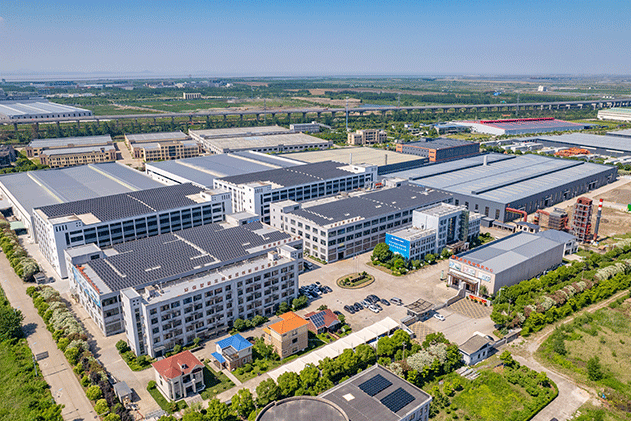
 ONLINE