Wood-plastic composites have been around for decades, but early-generation products had a reputation for fading, cracking, and surface degradation after a few years outdoors. The problem wasn’t the concept—it was the execution. WPC blends wood fiber with thermoplastic resin, and while the combination offers stiffness and dimensional stability, the exposed surface remains vulnerable to UV radiation, moisture ingress, and biological attack.
Co-extrusion addresses this vulnerability by adding a protective cap layer during the manufacturing process. Instead of a single homogeneous extrusion, co-extrusion pushes two material streams through a single die simultaneously. The core contains the structural WPC formulation—wood fiber, polymer, coupling agents, and lubricants. The cap layer, typically a thinner shell of polymer-rich material, wraps around the core and becomes the exposed surface.
The result isn’t just a coating applied after the fact. The cap layer bonds with the core at the molecular level during extrusion, creating a unified structure that won’t peel or delaminate under normal conditions. That bond strength makes all the difference when the panel faces years of sun, rain, and temperature cycling.
Ultraviolet radiation breaks down the lignin in wood fiber and oxidizes the polymer matrix, leading to chalking, fading, and eventual surface cracking. Traditional WPC manufacturers tried to mitigate this with UV stabilizers mixed throughout the material, but that approach has a fundamental limitation: stabilizers get consumed over time, and the entire cross-section contains the same concentration whether it needs it or not.
Co-extrusion allows manufacturers to concentrate UV stabilizers, pigments, and photostabilizers in the cap layer where they’re needed most. A study published by the US Forest Service examined HDPE/wood-flour composites with and without a co-extruded cap layer. The results showed that co-extruded samples with a stabilized cap layer exhibited significantly less discoloration during accelerated UV exposure. Further research confirmed that stabilized cap layers blocked most of the UV radiation, preventing it from reaching the inner WPC core.
| Performance Metric | Uncapped WPC | Capped WPC (Co-extruded) |
|---|---|---|
| UV discoloration (ΔE) | High (4.5) | Low (<2.0) |
| Moisture absorption | Moderate | Low |
| Surface cracking (years) | 2–4 | 6–10+ |
| Color retention | Fades noticeably | Maintains well |
The numbers above are drawn from accelerated weathering studies and industry testing protocols. Actual performance varies by cap layer formulation and exposure conditions, but the directional advantage of co-extrusion is well documented.
Water is WPC’s other enemy. Wood fiber absorbs moisture, which causes swelling, creates stress concentrations, and provides a pathway for fungal decay. Even with good compounding, moisture eventually finds its way into the material through microscopic cracks and exposed edges.
The cap layer in a co-extruded WPC acts as a moisture barrier. Because the cap contains little to no wood fiber—often formulated with higher polymer content or entirely different resin systems—its water absorption characteristics differ fundamentally from the core. Research from the USDA Forest Products Laboratory confirmed that co-extruded WPC with a cap layer provided improved moisture resistance compared to control samples without the cap.
This matters in real-world applications. A decking installation at a coastal resort in Hainan Province, where humidity averages above 80% year-round, compared capped and uncapped WPC boards side by side over 36 months. The uncapped boards showed visible edge swelling and surface checking within 18 months. The co-extruded boards remained dimensionally stable with no surface degradation through the full observation period. The resort’s maintenance team estimated they saved roughly two-thirds of the usual refinishing labor compared to their previous uncapped WPC installations.
Here’s where the story gets more nuanced. Co-extrusion improves surface durability and weathering resistance, but it doesn’t necessarily enhance the core mechanical properties of the WPC. Flexural strength, impact resistance, and screw-holding capacity are largely determined by the core formulation.
Some manufacturers have taken this as a signal to optimize the core for structural performance while using the cap layer purely for protection. The core can incorporate higher wood-fiber content for stiffness, or specific coupling agents for better interfacial bonding, without worrying about how those choices affect surface appearance. The cap layer handles the aesthetics and weather resistance independently.
This decoupling of functions represents a genuine engineering advance. Prior to co-extrusion, every formulation decision involved a compromise between surface quality and structural integrity. With co-extrusion, those two objectives no longer compete for the same material budget.
That said, the cap layer does add cost. The additional extrusion equipment, the separate material stream, and the tighter process controls all increase production expense. For applications that stay indoors or see minimal UV exposure, uncapped WPC may still be the more economical choice. The value proposition of co-extrusion hinges on the service environment—not every project needs the extra protection.
Co-extrusion isn’t a set-it-and-forget-it technology. The two material streams must match in melt temperature, viscosity, and flow rate to form a consistent bond. If the cap layer cools too quickly, adhesion suffers. If the core and cap have incompatible rheology, the interface develops visible flow lines or weak spots.
Early co-extrusion trials encountered exactly these problems. Some cap layers cracked during weathering tests because the formulation didn’t accommodate the thermal expansion differences between core and cap. Manufacturers learned to adjust cap layer thickness, add elastomeric modifiers, and fine-tune processing parameters to achieve reliable results.
Modern co-extrusion lines incorporate sophisticated feedback controls that monitor layer thickness, temperature profiles, and line speed in real time. A facility running 50 co-extrusion lines, for instance, maintains consistent output through automated adjustments that compensate for raw material variations and ambient conditions. The technology has matured significantly since the early 2010s, and the failure modes that plagued initial adopters are now well understood and manageable.
Co-extruded WPC shines in applications where aesthetics and longevity matter over the long haul. Outdoor decking, facade cladding, and marine infrastructure all benefit from the enhanced UV and moisture protection. The premium paid for co-extrusion pays back through extended service life and reduced maintenance.
For interior applications—wall panels, furniture components, decorative trim—the extra protection often goes unused. Interior environments don’t stress WPC the way outdoor exposure does, and the cost premium for co-extrusion may not deliver a corresponding benefit.
The decision ultimately comes down to lifecycle cost analysis. A manufacturer or specifier needs to weigh the upfront premium against expected maintenance intervals, replacement frequency, and the cost of premature failure. In many outdoor applications, the math favors co-extrusion. In indoor settings, it’s a harder sell.
Companies like Hangzhou Oufei have built their production around co-extrusion capabilities, operating multiple lines that deliver capped WPC panels with consistent layer thickness and bond quality. The manufacturing infrastructure matters—co-extrusion demands precision that not every factory can maintain at scale. For buyers, that consistency translates into predictable field performance, which is ultimately what drives material selection in commercial and industrial projects.
Copyright © 2026 by Hangzhou Oufei New Material Co.,Ltd. — Privacy Policy
 EN
EN

 Hot News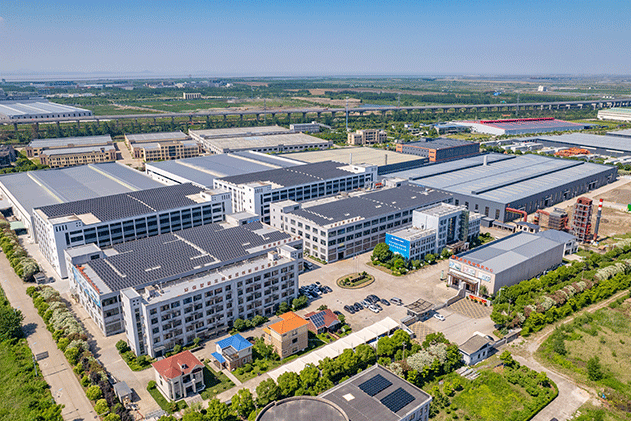
 ONLINE