
The sustainability case for WPC material does not rest on a single number, and that is precisely why it keeps getting oversimplified in both marketing decks and online comparisons. A product can have a higher cradle-to-gate carbon footprint than lumber and still deliver a lower lifetime impact if it lasts longer and needs less upkeep. It can also carry a recycled content claim that sounds impressive until the actual percentages and feedstock sources are checked. Getting a useful answer means looking at the full service life, not just the manufacturing gate.
A meaningful share of commercial WPC boards is built from materials that would otherwise be landfilled or burned. One UK-manufactured WPC product reports 95% recycled content, split between 50% wood fiber sourced as waste from an FSC-certified timber processor and 45% HDPE recovered from recycled milk bottles. Another decking line uses up to 60% FSC-certified reclaimed wood from post-industrial manufacturing and 30% recycled HDPE. Those figures are not universal, but they show what the material category can achieve when the supply chain is set up deliberately.
The wood fraction is often sawdust, planer shavings, or agricultural residue, which means the composite is not competing with solid timber for the same log. That distinction matters. A traditional wood product typically requires a tree to be felled and milled. A WPC board can absorb a waste stream from a furniture factory or a rice mill and lock that carbon into a durable building product for decades. ISO 20819-1 exists specifically to standardize how recycled content in wood-plastic composites is declared and calculated, which gives specifiers a way to verify claims instead of taking them at face value.
The most common criticism of WPC is its manufacturing energy demand. A review of two life cycle assessments found that hardwood lumber production generated about 567 kg of carbon emissions per cubic meter, while WPC generated roughly 1,129 kg per cubic meter. That gap is real, and it comes largely from the energy needed to melt and extrude the plastic fraction. Anyone who claims WPC is automatically lower-carbon at the factory gate is skipping an inconvenient step.
The picture changes when the functional unit includes service life. A comparative LCA published in the European Journal of Wood and Wood Products compared WPC terrace decking against bilinga, a tropical hardwood, and pressure-impregnated pine. Under the assumption of identical lifespans, pine performed best across every impact category, and WPC was mostly advantageous compared with the tropical hardwood. The authors noted that WPC terraces may show higher lifespans than wooden terraces and can be recycled, both of which would narrow the gap with pine. A separate study at Uppsala University modeled a 100-year facade service life and found WPC total emissions at 19.46 tons of CO2-equivalent, roughly 6% lower than rough Thermowood and about 11% lower than planed Thermowood, with an initial cost roughly 75% below the Thermowood alternatives.
The takeaway is not that WPC wins every comparison. It is that the manufacturing penalty gets diluted by longevity, and the material can compete when the service life is long and maintenance is minimal. A board that needs repainting, resealing, or replacement every few years carries an environmental cost that does not show up in a cradle-to-gate number.
Natural wood exposed outdoors needs periodic staining, sealing, or painting to slow moisture cycling and UV degradation. Each of those interventions consumes material, releases solvents, and adds labor and transport. WPC decking and cladding are typically cleaned with soap and water, with no scheduled sanding or refinishing. Over a 25-year service life, the cumulative resource burden of repeated wood coating cycles is not trivial, and it is one of the reasons LCA studies that include maintenance tend to narrow or reverse the early carbon gap.
There is a practical trade-off worth stating plainly. WPC does not weather to a silver-gray patina the way untreated wood does, and some formulations can fade or chalk over time depending on the pigment package and UV stabilization. The low-maintenance benefit is real, but it is not the same as zero maintenance. Surface dirt and organic debris still need to be washed off, especially in humid climates where biofilm can accumulate on any exterior surface. The material removes the painting cycle, not the cleaning cycle.
The FISSAC project, a European industrial symbiosis initiative, installed WPC decking, fencing, and cladding at a demonstration park in San Sebastián de los Reyes, Madrid. The industrial-scale production run used recycled wood and plastics as alternative raw materials, and the elements were left exposed to real environmental conditions for ongoing monitoring of physical and mechanical properties. That kind of field exposure matters because recycled feedstock can introduce variability that a pristine virgin-resin sample will not show. Feedstock consistency, sorting, and drying discipline are what separate a durable recycled-content board from one that fails early because a contaminated batch compromised the polymer matrix.
A separate LCA case study from Italy described a closed-loop approach in which existing WPC facade cladding was dismantled, the material was sent back into profile production, and a collection system for production and construction-site waste was introduced. The environmental case for WPC strengthens considerably when that loop actually closes, because the plastic fraction stops being a one-way fossil input and becomes a repeatedly usable resource.
| Metric | WPC with recycled content | Tropical hardwood decking | Thermally modified wood |
|---|---|---|---|
| Recycled feedstock share | Up to 95% in some commercial products, commonly 60–85% | None, virgin timber | None, virgin softwood |
| Cradle-to-gate GWP | Higher per cubic meter than lumber in some LCAs (about 1,129 kg CO2-eq/m³ in one review) | Lower in the same review (about 567 kg CO2-eq/m³) | Lower than WPC at the gate, but life-cycle results depend on maintenance and lifespan |
| Typical service life, exterior | Often 20–25+ years depending on formulation and installation | Varies by species and treatment, shorter if unmaintained | Roughly 30 years with proper installation |
| Scheduled coating maintenance | None required for color retention in many products | Regular staining or sealing if appearance matters | None required if natural graying is accepted |
| End-of-life pathway | Recyclable in principle; infrastructure-dependent in practice | Reuse, energy recovery, or landfill | Reuse, biomass recovery, or natural degradation |
The table also exposes the weak point in the WPC sustainability story. Recyclability is a technical property, not a guaranteed outcome. A board that can be reground is only circular if a collection and reprocessing chain exists within a reasonable transport distance. In markets without that infrastructure, end-of-life WPC may still go to landfill. That limitation should be stated honestly rather than buried under a “100% recyclable” headline.
WPC expands and contracts with temperature, and the coefficient is typically higher than solid wood in the transverse direction, though lower than some generic wood values depending on formulation and test method. Installation details need expansion gaps, and dark colors can reach surface temperatures well above ambient in direct sun. A dark WPC deck in a hot climate can become uncomfortable underfoot in a way that lighter-colored wood does not. These are not deal-breakers, but they are design constraints that belong in the specification conversation alongside the sustainability metrics.
The material also behaves differently under fire exposure than solid wood, and fire performance depends heavily on formulation, thickness, and the surrounding assembly. No single material is universally superior across every performance category. Sustainability is one axis, and it should be weighed against structural, thermal, and fire requirements rather than treated as the only deciding factor.
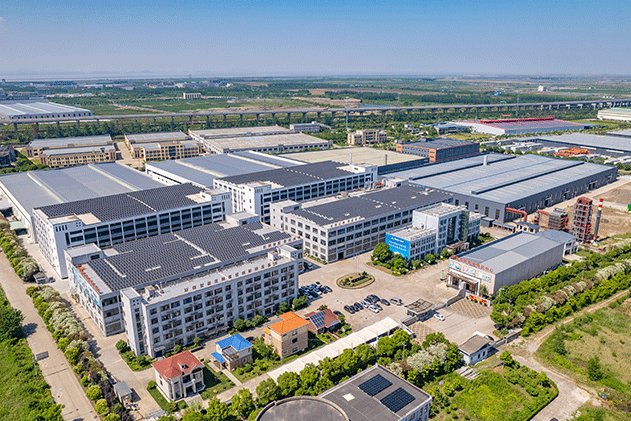
A recycled-content claim is only as good as the consistency of the incoming feedstock and the control of the extrusion process. Variations in wood flour moisture, plastic melt flow, and additive dispersion can produce boards with different density, different moisture uptake, and different long-term weathering behavior, even when the nominal recipe is the same. That is why production scale and process discipline matter for anyone evaluating WPC on sustainability grounds. A supplier that can hold recycled content percentages within a tight band across batches, and that can document feedstock sources against a standard like ISO 20819-1, gives a specifier something to audit. Hangzhou Oufei New Materials has been extruding PVC and WPC sheet since 1997 and operates more than 50 automated lines, which means the material consistency conversation can begin with a manufacturing track record rather than a single lab sample. The sustainability case for WPC material ultimately depends on whether the board that arrives on site actually matches the performance that the life cycle assessment assumed.
Copyright © 2026 by Hangzhou Oufei New Material Co.,Ltd. — Privacy Policy
 EN


 Hot News
 ONLINE