
Solid timber has a feel and a structural honesty that designers keep coming back to. It also moves, checks, rots, and feeds insects once moisture finds a way in. Ordinary thermoplastics solve the decay problem but introduce their own headaches: they flex under heat, look synthetic, and offer little stiffness for their weight. Wood plastic composite, usually shortened to WPC, sits between those two poles on purpose. The interesting part is not that wood flour and polymer are mixed together. It is how the interface between those two phases is engineered so the final profile behaves more like a tuned structural material than a compromise.
A common assumption outside the industry is that wood flour gets added mainly to cut resin cost. Cost reduction is real, but it undersells the mechanical role. Cellulose fibers carry a high modulus relative to the thermoplastic matrix. When they are dispersed and bonded well, they raise the stiffness of the composite and pull down the coefficient of thermal expansion. Polyethylene on its own has a thermal expansion behavior that causes long runs of cladding or decking to grow and shrink noticeably across a day of sun exposure. Wood fiber restrains that movement at the molecular scale. The fiber phase also modifies fire behavior compared with neat plastic, though it does not make the product noncombustible.
The trade-off is that wood flour is hydrophilic. The hydroxyl groups on cellulose surfaces attract water, while the polyethylene matrix is hydrophobic. Without a bridge between those chemistries, the fiber pulls away from the polymer under moisture cycling, and the composite loses the very reinforcement it was supposed to gain.
The step that separates a durable WPC from a crumbly one is interfacial adhesion. Maleic anhydride grafted polyethylene, usually called MAPE, is the workhorse coupling agent in polyethylene-based systems. The anhydride groups react with hydroxyl sites on the wood surface, while the polyethylene backbone entangles with the matrix. Even at low addition levels, around 3 weight percent, studies show measurable improvement in tensile and flexural properties because the stress transfer across the fiber-matrix boundary becomes far more efficient.
Once that bond is in place, the composite can carry load in a way that neither ingredient manages alone. Flexural strength values for HDPE-based WPC with 40 percent wood flour and a coupling agent commonly fall in the 10 to 25 MPa range, depending on formulation and processing. That is not steel territory, but it is enough for decking, cladding, and door skins where stiffness and dimensional calm matter more than ultimate load capacity.
The performance argument becomes clearer when WPC is set against the two parent materials on the metrics that drive real project decisions: moisture uptake, thickness swelling, and thermal movement. Wood absorbs well over 100 percent of its weight in water over prolonged immersion. Commercial WPC profiles typically absorb far less, and the difference in swelling behavior is even more consequential for joints and fixings. The table below pulls together representative ranges from published composite research and product standards.
The pattern is not that WPC wins every column. It wins the columns that matter for exposed, long-run profiles: it moves less than timber when wet, and it holds shape better than unfilled plastic when warm. A dock or balcony board that swells and cups creates trip hazards and trapped water. A neat plastic board that softens and sags under a midday sun creates a different kind of call-back. WPC narrows both failure paths at once.
Some years ago, a coastal reclamation project used WPC deck boards around a saltwater intake structure. The boards performed well on moisture and rot, as expected. The problem showed up on a south-facing walkway where the boards were fixed tight to steel joists with no allowance for movement. Summer surface temperatures pushed the profiles into a range where creep resistance drops sharply. The middle of each span sagged between supports, and the fasteners began to bear against the board edges. The material was not defective. The detailing had ignored how a thermoplastic composite behaves under sustained load at elevated temperature.
The lesson is useful because it separates a material property from an installation error. WPC decking grades are rated under standards such as ASTM D7032 for establishing performance ratings, and European work under EN 15534 sets creep deflection limits tested at controlled temperatures. But a profile that passes a 20°C creep test can still deflect noticeably at 50°C under the same load, and published research has shown that some grades meeting the minimum standard can fail near the deflection limit when loads become slightly more demanding. The combination of wood and plastic is genuinely useful, but it does not repeal the physics of viscoelasticity.
A technical discussion that stops at the benefits is not much use to a specifier. Three limitations deserve attention. First, creep under sustained load is temperature-sensitive, and dark-colored profiles in direct sun can reach surface temperatures well above ambient. Support spacing and fixation details need to account for that, not just the room-temperature datasheet. Second, oxidative degradation is a real failure mode if the antioxidant package is inadequate. The GeoDeck recall in the mid-2000s is a documented case where boards lacking the required antioxidant protection crumbled in service, and it remains a reminder that formulation discipline matters as much as the wood-to-plastic ratio. Third, WPC is not a substitute for structural timber in every load path. It performs best when the design uses its stiffness, moisture tolerance, and profile freedom rather than treating it as a drop-in replacement for a sawn joist.
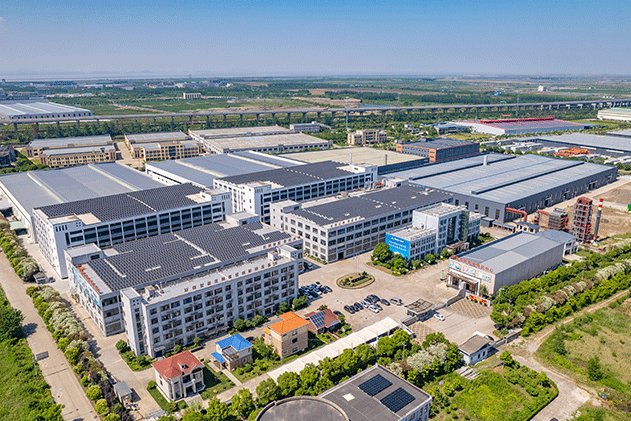
Hangzhou Oufei New Material Co., Ltd. operates in this space with co-extrusion capacity and a product range centered on WPC door panels and related profiles. For buyers evaluating suppliers, the practical question is not whether a sample looks right on a desk, but whether the compound formulation, coupling agent dosage, and line control can hold the same interface quality across production runs. That manufacturing discipline is where the wood-plastic combination either delivers on its promise or quietly reverts to a loose mixture of two materials that were never meant to carry load together.
Copyright © 2026 by Hangzhou Oufei New Material Co.,Ltd. — Privacy Policy
 EN


 Hot News
 ONLINE